The event brought together students and the school community for discussions on scientific innovation, highlighting the use of artificial intelligence to tackle climate challenges and its application in southern Chile.

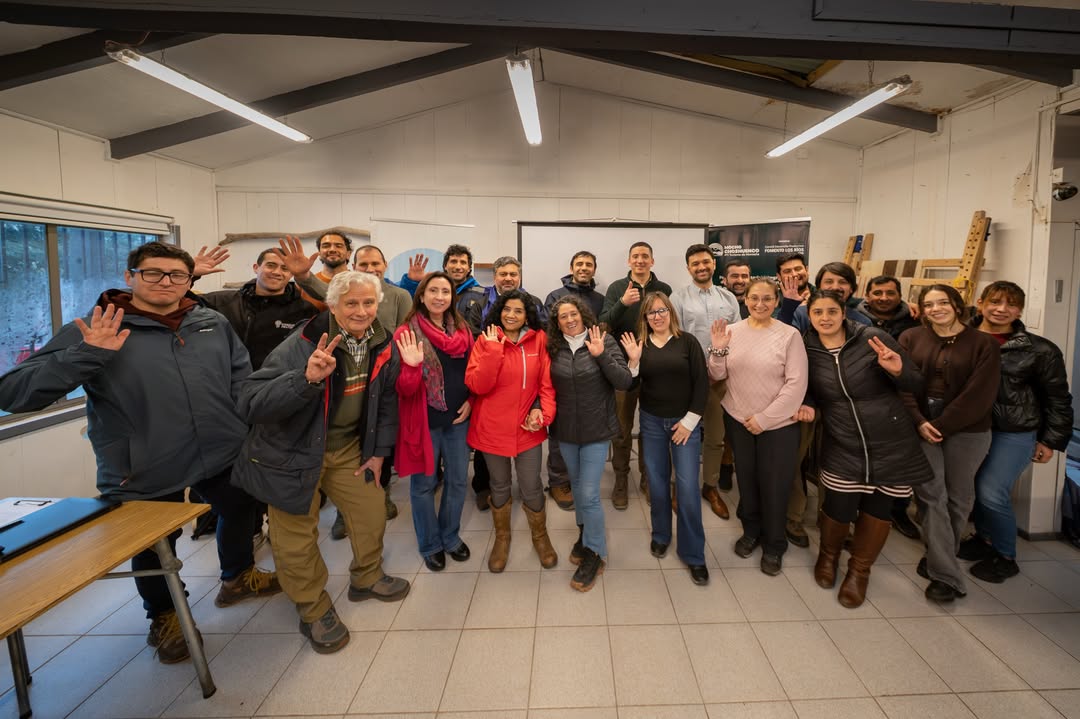
A new edition of Congreso Futuro Los Ríos was held at the Colegio de Cultura y Difusión Artística in La Unión, bringing together students, teachers and the local community to reflect on the role of artificial intelligence and science in the face of the climate crisis.
The program featured a keynote talk by César Quilodrán, who presented AI-based tools designed to identify scientific research with the potential to provide solutions to climate change, at a time when knowledge production is growing steadily worldwide.
This was followed by a panel discussion with academics from Universidad Austral de Chile, including Carla Marchant, Director of the Southern Andes Natural Laboratory, who discussed artificial intelligence as a tool for bringing scientific knowledge closer to mountain territories and their needs.
The panel discussed different applications of these technologies, from their impact on everyday life to their use in environmental monitoring and biodiversity conservation, including experiences in wetlands and other territories of southern Chile.
Participants highlighted the challenge of turning large volumes of scientific information into accessible, useful tools for decision-making, especially in territorial contexts where multiple environmental and social dimensions converge.
Carla Marchant appreciated the opportunity to talk with students and discuss the use of these technologies in science.
"We are grateful for the chance to talk with curious and motivated young people about the challenges of using artificial intelligence in science. Their questions invite us to reflect on the scope and limitations of these tools in our work," she said. señaló.
The event also helped bring complex concepts closer to the school community, promoting a broader understanding of how artificial intelligence can both contribute to and challenge the generation of knowledge in areas such as climate change, territorial management and ecosystem conservation.
Initiatives like this aim to decentralize access to scientific knowledge and encourage dialogue between academia and communities, strengthening the role of science as a tool for understanding and addressing socio-environmental challenges at different scales.