
Liquiñe-Ofqui documentary series: The Invisible Threads of the Landscape
What if we told you that beneath our feet lies a huge geological structure that helps explain some of southern Chile's most iconic landscapes?
The Liquiñe-Ofqui Fault runs for more than 1,200 kilometers, connecting volcanoes, hot springs, rivers, lakes, forests and fjords. It is one of the territory's singularities: an active structure that shapes its relief and the natural processes that transform it.
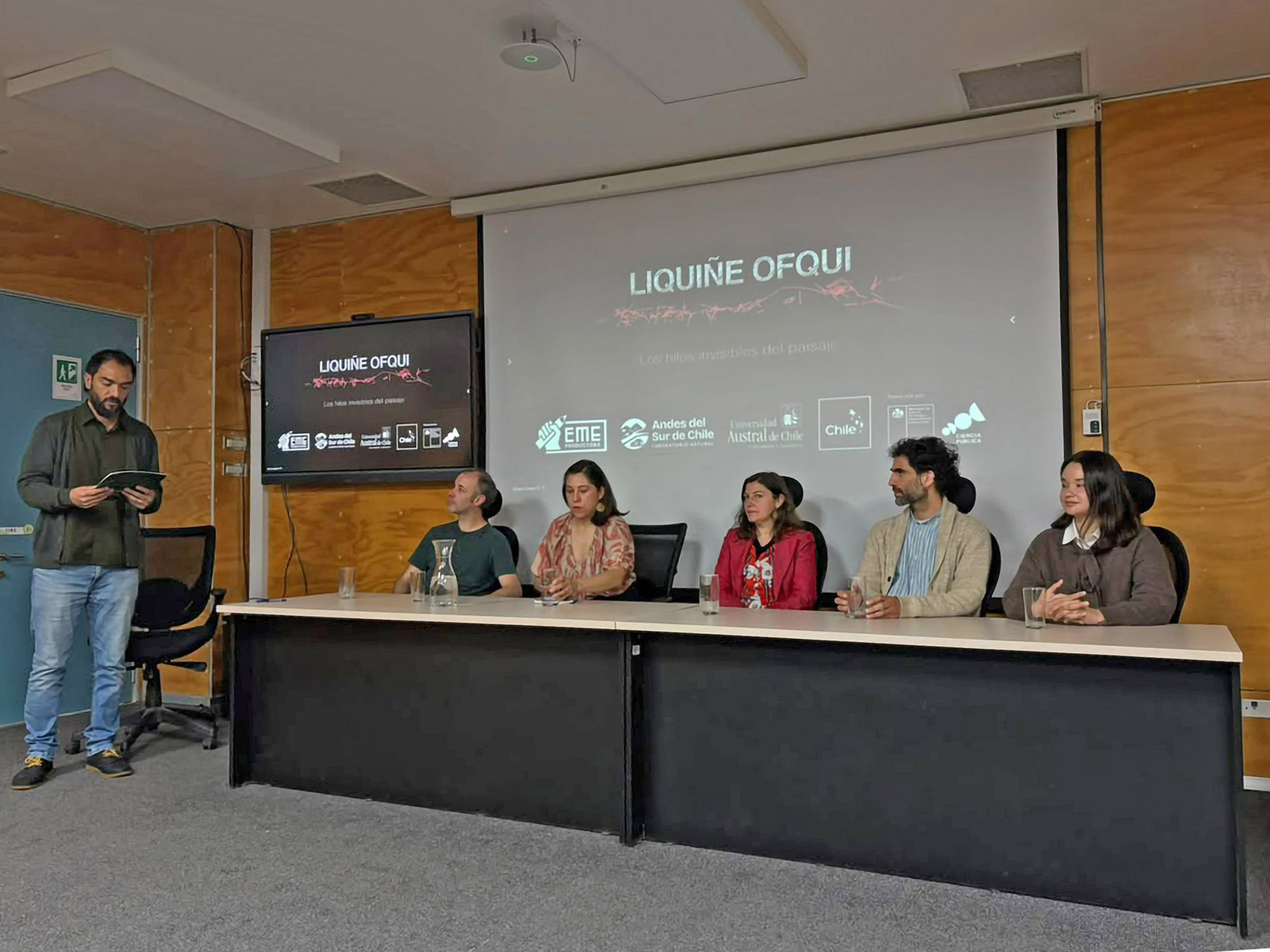
"Liquiñe-Ofqui Fault: The Invisible Threads of the Landscape" is a six-episode audiovisual series that invites us to discover these connections. Through scientific storytelling, images, maps and animations, it explores what happens beneath the surface and how these processes shape the landscapes we live in and travel through.
Produced by Productora EME, in collaboration with the Southern Andes Natural Laboratory and sponsored by Universidad Austral de Chile. It was also supported by Marca Chile, the Historical and Heritage Archive of the Museology Office of Universidad Austral de Chile, and photographers and other people and institutions who contributed images, archives and knowledge to enrich the portrayal of the territory.
Project funded by the Ciencia Pública program of the Ministry of Science, Technology, Knowledge and Innovation.
Episode 1
Liquiñe-Ofqui documentary series: The Invisible Threads of the Landscape
In this first episode, "Fault System", we look at the origin, features and importance of the Liquiñe-Ofqui Fault, and how these large geological structures cross the territory and help explain the shape of southern Chile's landscape.
Episode 2
Volcanoes
Why do so many volcanoes in southern Chile seem to line up across the territory? In this second episode, "Volcanoes", we explore the relationship between volcanism in southern Chile and the Liquiñe-Ofqui Fault System, and how the interaction between subduction and tectonic structures influences the location and features of many volcanic centers in this territory.
Episode 3
Hot Springs
En este cuarto capítulo, "Aguas", exploramos cómo la estructura del territorio influye en el recorrido y la forma de ríos, lagos y fiordos del sur de Chile, y cómo el Sistema de Fallas Liquiñe-Ofqui ayuda a comprender parte de esa compleja red de aguas que atraviesa el paisaje. Liquiñe Ofqui: los hilos invisibles del paisaje es una serie audiovisual de divulgación científica que invita a descubrir los procesos invisibles que han dado forma a los paisajes del sur de Chile. A través de seis capítulos, la serie aborda el Sistema de Fallas Liquiñe-Ofqui como un gran laboratorio natural, vinculando ciencia, territorio y paisaje.
Episode 4
Waters
In this fourth episode, "Waters", we explore how the structure of the territory influences the course and shape of rivers, lakes and fjords in southern Chile, and how the Liquiñe-Ofqui Fault System helps us understand part of the complex network of waters that crosses the landscape. Liquiñe-Ofqui: The Invisible Threads of the Landscape is a science outreach audiovisual series that invites viewers to discover the invisible processes that have shaped the landscapes of southern Chile. Across six episodes, the series presents the Liquiñe-Ofqui Fault System as a great natural laboratory, linking science, territory and landscape.
Episode 5
Forests
How can a landscape's history be read through its forests? In this fifth episode, "Forests", we explore how the geography, climate and natural history of southern Chile are expressed in its forest ecosystems, and how studying these forests helps us understand environmental change, landscape dynamics and the relationships between biodiversity and territory.
Episode 6
Living on Faults
In this sixth episode, "Living on Faults", we explore what it means to live in a territory shaped by volcanoes, faults, landslides and other natural processes. Rather than seeing them only as threats, the episode invites us to understand the landscape's dynamics in order to recognize its risks, make better decisions and find more mindful ways of living in southern Chile.

